
Is the Sur-Ron Ultra Bee Worth It? An Honest Review
Let's get one thing straight from the off: this isn't a sales pitch. We sell the Ultra Bee, yes, but if you're spending £5,499 on an electric bike, you deserve a straight answer on whether it's actually worth it. Some people absolutely love this bike. Others buy it, ride it once, and immediately wish they'd saved a few quid and grabbed a Light Bee X instead. So here's the honest version.
Quick Spec Overview
Before we get into the riding, here's where the Ultra Bee sits on paper:
| Spec | Detail |
|---|---|
| Motor | 21kW peak (Turbo mode), 18kW in Sport |
| Top Speed | ~68 mph (stock) |
| Claimed Range | 56 miles |
| Weight | ~85 kg (187 lbs) |
| Seat Height | 910 mm (35.8 in) |
| Suspension | KYB-spec fully adjustable forks and rear monoshock |
| Brakes | 240mm hydraulic discs front and rear |
| Traction Control | Surron SRTC (adjustable) |
| Road-Legal Option | Yes, LE1 registered version available |
| Price | From £5,499 |
The numbers look strong on paper. The interesting question is whether they translate to the trail.
What We Actually Love About the Ultra Bee
The power delivery
The 21kW peak figure sounds alarming until you ride it in Daily mode, where the power is smooth, progressive, and genuinely enjoyable. Sport mode is where things get interesting: proper torque, instant response, and enough grunt to wheelie without much effort. Turbo mode exists but honestly, most riders rarely use it. It gives you a 10-second burst that's a bit unrefined and cuts out at exactly the wrong moment. The standard three power modes are all you need.
What riders consistently say online and in reviews is that the power delivery on the Ultra Bee feels more planted than on the Light Bee X. The extra wheelbase and weight help the bike use the power properly rather than just spinning up.
The suspension
The KYB-spec fully adjustable forks are a genuine highlight. Riders coming from modded Light Bee Xs are almost universally stunned by how much better the front end feels stock. The rear monoshock handles trail chop well and you can tune preload, compression, and rebound to suit your weight and riding style. Heavier riders above 90 kg will likely want to add preload, but the adjustment range is there.
Build quality and brakes
The forged aluminium frame feels solid. The 240mm hydraulic discs are genuinely powerful and consistent, with no fade even on long descents. Multiple owners with 1,000-plus miles on their bikes report no structural issues and minimal maintenance requirements. One Reddit user with 2,000 miles on a road-legal version noted the suspension is still performing well and the bike has needed almost nothing beyond basic upkeep.
Traction control
The Surron SRTC is genuinely useful, especially in wet conditions or on loose terrain. You can dial it in or out depending on the trail. Slippery roots and wet mud are much more manageable with it active. It's not gimmicky at all: it's one of the things that makes this bike more versatile than it would be otherwise at this power level.
The road-legal option
The LE1 version is the only Sur-Ron you can legally ride on UK roads. That alone opens up a completely different set of use cases. More on that below.
What Could Be Better
The weight
This is the big one. At around 85 kg, the Ultra Bee weighs nearly twice as much as a Light Bee X. On flowing singletrack it isn't a problem. In tight technical sections, on steep climbs, or when you're trying to manhandle the bike through a tricky line, you notice it. If you're a smaller or lighter rider, it can feel like a lot of bike. It's not unmanageable, but it's a real consideration if you're used to a nimble lightweight machine.
Range under hard riding
Sur-Ron claims 56 miles. Real-world figures from owners vary considerably. On moderate trails at mixed throttle, 40 to 44 miles is realistic. Hammer it in Sport mode, ride in hilly terrain, or weigh 90 kg-plus, and you're looking at closer to 28 to 35 miles. One detailed test by Electric Cycle Rider in 2025 returned just 20 miles in continuous Sport mode on technical terrain with elevation. That's not a dealbreaker, but go in with realistic expectations rather than the headline figure.
The stock seat
A few riders flag this one. The stock seat is functional but not particularly comfortable on longer rides. For half-hour blasts on trails it's fine. Extended sessions start to reveal that the padding is on the thin side. An aftermarket seat is a relatively cheap upgrade if you plan to ride for hours at a time.
Price
At £5,499, the Ultra Bee costs £2,300 more than a Light Bee X. That gap is hard to ignore. You're getting significantly more bike for the money, but it's only worth it if you'll actually use the extra capability. If you're a casual weekend rider who mainly does easy trails, the Light Bee X will do everything you need and leave money in your pocket.
How It Rides on Trails

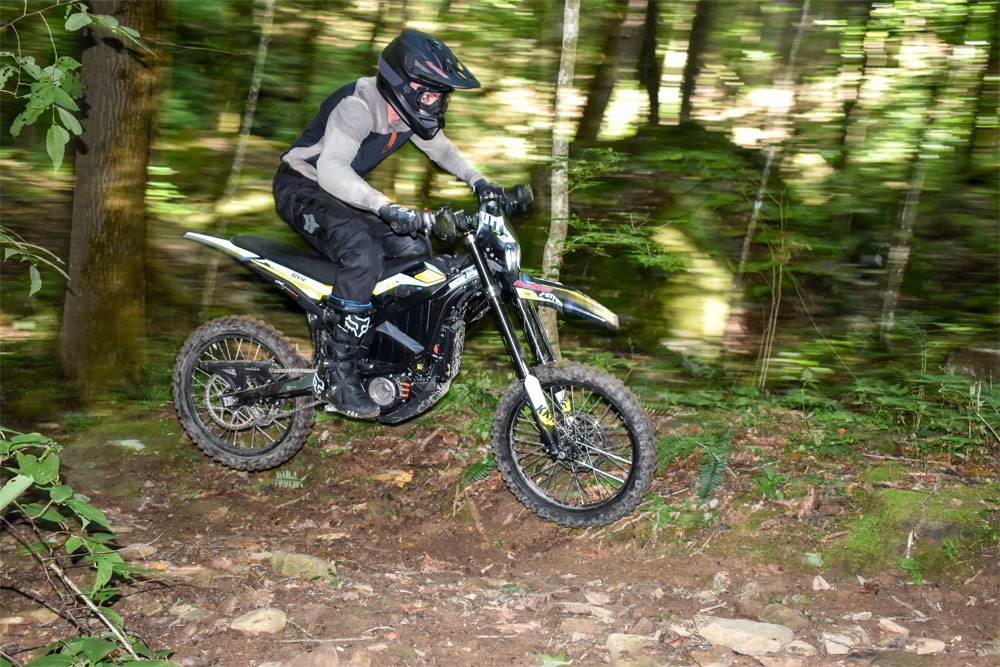
On flowing, rooty singletrack, the Ultra Bee is properly enjoyable. The longer wheelbase gives it stability at speed that the Light Bee X simply doesn't have. It tracks confidently, the suspension irons out the rough stuff, and the power is always there when you want it. Riders who've spent time on 250cc or 300cc petrol enduros tend to feel right at home immediately.
Tight technical terrain is where the weight becomes a factor. You can muscle it through, and experienced riders adapt quickly, but it does take more physical effort than a lighter bike in rocky or confined sections. A few owners recommend upgrading the front wheel to 21 inches for off-road use: the stock 19-inch tends to wash out on loose surfaces and can feel vague in choppier conditions.
The traction control earns its keep on slippery terrain. Set it at a middle setting on wet trails and the bike stays composed even when you're pushing the power. The brakes inspire confidence on steep descents: they're strong, progressive, and don't fade.
One quirk worth knowing: the rear brake operates via a hand lever on the left handlebar rather than a foot pedal. It takes a session or two to get used to if you're coming from a conventional dirt bike, but most riders adapt quickly and end up preferring it.
The Road-Legal Version (LE1): Is It Worth It?
The road-legal Ultra Bee is DVLA-registered as an L1E electric moped, restricted to 28 mph on public roads. You need a CBT or full licence, third-party insurance, and a helmet. Road tax is currently free for electric L1E vehicles.
The appeal is clear: ride to a trail head, have a session, ride home. No van, no trailer, no faff. One Reddit owner documented 2,000 miles on their road-legal Ultra Bee across road and trail use, calling it excellent in both environments. The suspension and brakes that make it capable off-road also make it feel composed on tarmac.
Range at road speeds is shorter: expect 25 to 30 miles on a commute rather than the 40-plus you'd see on easy trails. If your commute is more than 15 miles each way, factor in a charge. One minor quirk: the daytime running light has no off switch, which a few owners find mildly irritating. Not a dealbreaker, just worth knowing.
If commuting or riding to trail heads legally matters to you, the LE1 is absolutely worth considering. It's the most versatile Sur-Ron on the market.
Ultra Bee vs Light Bee X: Should You Upgrade?

This is the question most people come here to answer. Here's the honest version.
Stick with the Light Bee X if: you're a beginner or intermediate rider, your trails are tight and technical, you want a lightweight bike you can easily transport, or your budget is a concern. The LBX at £3,199 is a genuinely outstanding bike that doesn't need much to be exceptional.
Upgrade to the Ultra Bee if: you've outgrown the Light Bee X's power, you ride fast flowing trails where stability matters, you want proper adult bike ergonomics, you have experience on full-size dirt bikes, or you want the road-legal option. Riders who've made the jump consistently describe it as a step-change rather than an incremental improvement. The suspension, brakes, and power delivery are in a different league.
The weight difference is real and it matters. On tight trails that weight is something you actively manage rather than ignore. But on the right terrain with the right experience, it's the better bike.
Who Is the Ultra Bee For?
The Ultra Bee suits a specific type of rider. You'll get the most out of it if you match this profile:
- You've ridden petrol dirt bikes and want something quieter, lower-maintenance, and just as capable
- You've owned or ridden a Light Bee X and want more: more power, more suspension travel, more stability at speed
- You want a dual-purpose machine that can do trails and commuting (LE1 version)
- You're a confident adult rider, comfortable with a heavier bike, and your trails reward power and stability over agility
- You're not a beginner: the power at this level needs to be respected
If that's you, the Ultra Bee will almost certainly put a big grin on your face. If you're unsure, start with the Light Bee X. You can always upgrade later, and the LBX won't leave you wanting on most trails.
Frequently Asked Questions
What is the real-world range of the Sur-Ron Ultra Bee?
It depends significantly on terrain, rider weight, and which power mode you're in. On moderate trails at mixed throttle, most riders report 38 to 44 miles. In Sport mode on technical terrain, that can drop to 28 to 35 miles. The 56-mile claimed range is achievable in easy riding conditions but isn't a typical trail figure.
Is the Ultra Bee legal on UK roads?
The off-road version is not legal on public roads. The LE1 road-legal version is DVLA-registered as an L1E electric moped and can be ridden on UK roads with a CBT or motorcycle licence, insurance, and a helmet. It's restricted to 28 mph in road-legal form.
How does the Ultra Bee compare to the Light Bee X?
The Ultra Bee is heavier, more powerful, and more expensive, with significantly better suspension and brakes. The Light Bee X is lighter, more nimble, and better suited to tight technical terrain. The Ultra Bee wins on fast flowing trails and for experienced riders who want more capability. The Light Bee X wins on value and versatility for most riders.
What upgrades does the Ultra Bee need out of the box?
For most riders, very few. A 21-inch front wheel is recommended for serious off-road use as the stock 19-inch can wash out on loose ground. Heavier riders may want to tune the suspension preload. The stock brakes, traction control, and power delivery are all strong from the factory.
Is the stock seat comfortable?
It's fine for shorter rides but a bit thin for extended sessions. An aftermarket seat is a worthwhile upgrade if you're planning multi-hour trail days.
Can I finance the Ultra Bee?
Yes. At Traction Bikes we offer Klarna and Shop Pay instalments, so you can spread the cost and get riding sooner rather than later.
The Verdict
The Sur-Ron Ultra Bee is a genuinely impressive machine. The power, suspension, and build quality are all a step above what you'd expect at this price point, and the road-legal LE1 version adds a level of versatility that no other Sur-Ron can match. The weight is noticeable, the stock seat is average, and range under hard riding falls short of the claimed figure. These things matter, and you should go in knowing them.
If you've outgrown the Light Bee X or you're a petrol rider looking to switch, the Ultra Bee is the right move. If you're newer to the sport or mainly ride tight technical trails, the Light Bee X at £3,199 is the smarter buy.
View the 2025 Sur-Ron Ultra Bee at Traction Bikes or browse the full range here.
0 comments